News
Interplay Media
August, 2026
The Wagering Ad Reset
What It Signals For The Industry
For years, wagering advertising has been woven into the sports media ecosystem. From broadcast coverage and pre-game programming to digital content and social feeds, it has become one of the most visible advertising categories in Australian sport.
The Interactive Gambling Amendment (Gambling Reform) Act 2026 introduces one of the most significant resets to wagering advertising we've seen, reshaping where, when and how wagering brands can reach audiences. The reforms introduce tighter restrictions across live sport, digital advertising, sponsorships and audience targeting, with further changes phased in through to 2031.
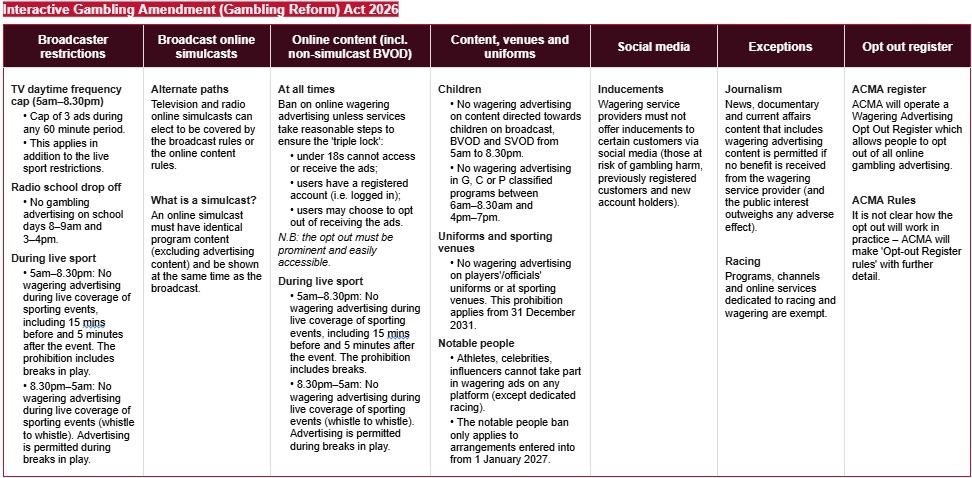
The headline measures are outlined in the accompanying table, but the bigger takeaway for the industry is the shift in regulatory thinking. These reforms move beyond limiting where wagering ads can appear and begin to address how, when and how often wagering brands can reach audiences.
What changes from 1 January 2027?
The first major change is around live sport. Wagering advertising will be prohibited during live sporting coverage between 5am and 8.30pm, with further restrictions applying to advertising around live sport later in the evening. Broadcasters will also face limits on the frequency of wagering ads during daytime programming.
Online advertising faces a different set of restrictions. Platforms will need to apply a combination of age verification, logged-in accounts and an opt-out mechanism before users can be served wagering advertising. The changes also introduce tighter controls around targeting, including restrictions on advertising to people who have previously opted out or are considered at risk.
The reforms extend beyond traditional advertising placements. New wagering partnerships involving athletes and influencers will be restricted from January 2027, while wagering branding on sporting uniforms and at venues will be phased out from 2031.
What does it mean for publishers?
For sports publishers, the impact goes beyond individual ad placements. Wagering has traditionally been closely aligned with live sport, where high audience engagement and frequency have made the category a significant part of the commercial mix.
The new rules will require publishers and platforms to take a closer look at how wagering audiences are reached, how inventory is sold and how targeting is managed.
That makes audience data, consent and the ability to understand exactly who is being reached increasingly important.
The bigger industry shift
The individual restrictions are significant, but collectively they point to a broader change in how wagering advertising is regulated.
The focus is moving from simply controlling where an ad appears to controlling the relationship between the advertiser and the audience: who can be reached, how frequently, through which channels and with what level of targeting.
For an industry that has historically relied heavily on the connection between wagering, sport and high-frequency audience engagement, that represents a meaningful change to the commercial landscape.
The immediate priority is understanding the new rules and preparing for the January 2027 changes. The longer-term question will be how publishers, platforms and advertisers adapt as wagering becomes a more restricted category within the wider sports media ecosystem.